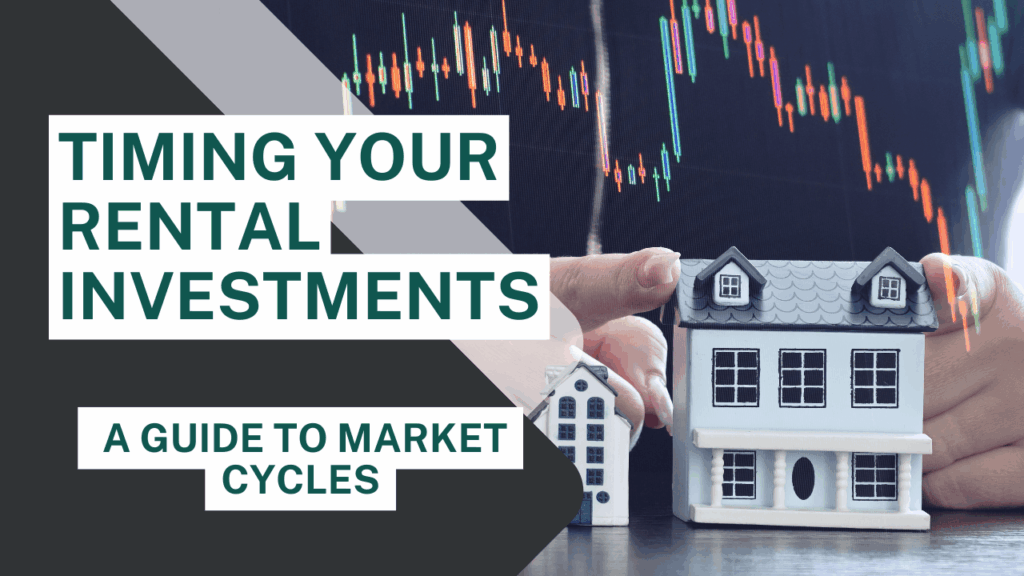
Have you ever wondered if there’s truly a “perfect” time to invest in real estate?
It’s a question every investor has asked at some point. While timing does matter, understanding why the market moves the way it does is even more important. Real estate markets move in cycles, and learning to read those cycles can mean the difference between chasing trends and strategically building lasting wealth.
Let’s break down what the real estate market cycle looks like, how it affects rental investments, and why, no matter the cycle, there’s always an opportunity to invest for those who know how to spot those opportunities.
Quick Overview:
|
Understanding Real Estate Market Cycles
Every expert has their own take on cycles in the market, but most can generally agree that real estate moves through four phases: Recovery, Expansion, Hyper-Supply, and Recession. Each stage carries its own opportunities and risks, and being able to identify where we are in the cycle is essential for timing rental investments effectively.
- Recovery: The Quiet Start of a New Cycle
The recovery phase begins when the market has hit bottom. Property values are low, construction has slowed or stopped, and the general mood among investors is cautious. Vacancy rates remain high, but they’re starting to stabilize. This is the phase when most people are still sitting on the sidelines, waiting for signs of improvement.
Smart investors recognize recovery periods as a chance to buy undervalued properties before the next upswing. Rental demand begins to rebound as job growth restarts and consumer confidence improves. Acquiring properties during this time often leads to strong appreciation and increasing cash flow in the years ahead.
Here’s an example. After the 2008 housing crisis, California’s market entered a long recovery. Investors who purchased in 2011 or 2012, when prices were depressed, often saw double-digit appreciation and surging rental demand within just a few years.
- Expansion: The Growth and Momentum Phase
The expansion phase is when confidence returns. Employment numbers are up, consumer spending grows, and rental demand strengthens. Construction picks up again but demand still tends to outpace supply. Property values climb, and vacancy rates fall. Rents often rise faster than inflation.
During expansion, investors can benefit from increasing property values and strong rental income. Financing is more accessible, and appreciation can significantly enhance returns. This phase is ideal for buy-and-hold investors or those looking to reposition underperforming assets.
But watch out for overconfidence. When the market feels “unstoppable,” bidding wars and speculative investments often emerge. Smart investors maintain discipline, analyzing deals based on fundamentals, not hype.
- Hyper-Supply: When the Market Begins to Overheat
Eventually, supply begins to catch up with (and then surpass) demand. Developers, responding to years of strong returns, flood the market with new construction. Rent growth slows, vacancies rise, and the first cracks begin to show in the “endless growth” narrative.
This doesn’t mean there aren’t opportunities. It’s just that they require careful selection. Look for properties in high-demand areas with strong job markets or unique amenities that set them apart. Avoid over-leveraging and focus on maintaining liquidity in case the market turns.
- Recession: The Correction Phase
No market grows forever. The recession phase follows when oversupply and external economic pressures such as rising interest rates, job losses, or reduced consumer spending, lead to declining rents and falling property values. Some investors panic and sell at a loss, while others see opportunity.
Cash is king during a downturn. Investors with liquidity can acquire assets at discounted prices from over-leveraged owners. While rents may soften temporarily, long-term fundamentals in California (limited land, high demand, population growth in key areas) continue to support recovery over time.
Timing Your Entry: How Investors Can Strategically Act in Any Phase
Understanding the market cycle is only the first step towards a successful and growing investment portfolio. The real skill lies in adjusting your investment strategy to the phase you’re in. Smart investors will not panic or over-react to every market shift. The moves you make will depend on where you stand, what you own, and where your investment goals ultimately take you. But we have some tips on how to set yourself up for success in any market cycle.
- During Recovery
Focus on value-add opportunities. Look for underperforming assets that can be improved through renovations or better management. This can increase earnings in an otherwise slow market. It’s also a good time to build relationships, especially with lenders and brokers. Financing may still be tight, so strong partnerships can open doors to deals others miss.
Think long-term. This is when you buy for future appreciation, not quick flips.
- During Expansion
Leverage growth responsibly. You’ll need to look for favorable financing terms but avoid overextending debt. Fixed-rate loans will be important. As interest rates rise later in the cycle, your long-term debt structure will protect your cash flow. It may also be a good time to refinance and reposition. Reinvest equity gains into new properties to compound returns.
- During Hyper-Supply
Focus on quality assets in prime locations with stable tenant demand. This is a good time to be selective. And build your reserves. Market corrections test liquidity: having cash on hand keeps you flexible. Consider mixing property types or locations to reduce risk. Now is the time to diversify your portfolio.
- During Recession
Buy when others are fearful. Distressed opportunities often emerge from bank-owned properties, motivated sellers, or discounted multifamily assets. Prioritize cash flow. Appreciation may stall, so focus on investments that perform based on income stability. You have to stay patient, because downturns eventually lead to recovery and historically, California’s markets bounce back stronger.
Beyond the Cycles: California’s Long-Term Strengths
Even as cycles ebb and flow, California remains one of the most resilient and desirable real estate markets in the world, especially when we’re looking at our markets in Sonoma County. Our economic base, spanning technology, entertainment, healthcare, and agriculture creates enduring housing demand. Add to that limited land availability, strict building regulations, and desirable climate, and you get a fundamental imbalance: more people wanting to live here than there are homes available.
This imbalance cushions downturns and fuels long-term appreciation. Historically, California’s real estate values have doubled roughly every 10–15 years, even when factoring in recessions. For rental investors, that means steady demand, strong rent growth over time, and the ability to build significant equity through patience and market knowledge.
How to Read the Signals: Practical Indicators to Watch
To effectively time your investments, we advise our investors to keep an eye on these key indicators that signal where the market may be headed:
- Employment and Wage Growth.
Rising employment signals expansion, while layoffs or stagnation often precede a slowdown. - Housing Permits and Construction Starts.
An uptick in new builds indicates confidence but if supply outpaces demand, a correction may be coming. - Interest Rates.
Higher rates can cool demand and prices; lower rates often reignite activity. - Vacancy and Rent Trends.
Increasing vacancies and slower rent growth often foreshadow oversupply or a shift in tenant demand. - Migration Patterns.
In California, movement between urban and suburban markets can indicate where the next wave of rental growth will occur. - Investor Sentiment.
When everyone is euphoric, be cautious. When fear dominates, look for opportunity.
It’s Always a Good Time to Invest When You Understand the Market
 The most successful investors don’t try to “time the market” perfectly. They position themselves intelligently within the market. Real estate wealth comes from disciplined buying, sound management, and a long-term vision. Understanding cycles allows you to adapt, not to retreat.
So, when is the best time to invest in California real estate?
The simple answer: when you know what you’re doing and why you’re doing it.
Every market cycle offers a window of opportunity. During downturns, you buy value. During expansions, you build momentum. During plateaus, you refine and stabilize.
The investors who thrive aren’t those who predict cycles perfectly. They’re the ones who adapt, study the signals, and stay true to their investment goals.
In California, where real estate remains a scarce and valuable asset, understanding the cycle gives you clarity. But conviction backed by strategy is what turns that understanding into lasting success.
We would be happy to help you understand the market cycles in a way that matters for your unique property or portfolio. Please contact us at Prestige Real Estate & Property Management. We manage homes in Sonoma County, including Santa Rosa, Windsor, Sebastopol, Petaluma, and Rohnert Park.
