
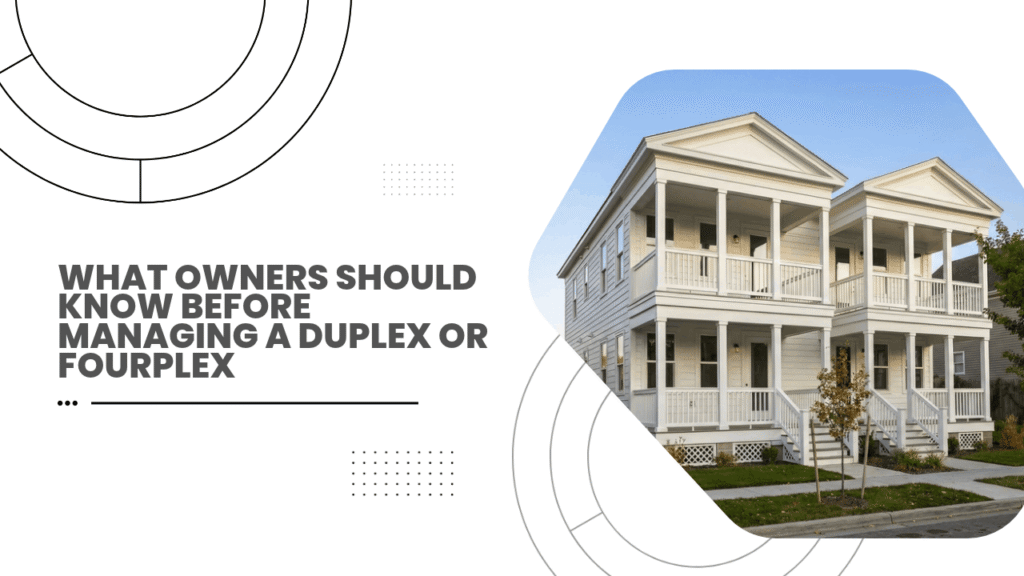
 What makes managing a duplex or fourplex in Sonoma County more complicated than managing a single-family rental?
The answer is simple: you are managing multiple households within one property, often with shared systems, shared spaces, and regulations that can affect how the property is used, improved, and operated.
A small multifamily property may have only two to four units, but the management considerations can be complex.
Understanding those details before purchasing, renovating, or self-managing a duplex or fourplex can prevent expensive surprises. Here’s what we can tell you as experienced Sonoma County property management experts.
What You Should Know:
|
Small Properties: Big Management
A duplex or fourplex occupies an interesting space in the rental market. It is small enough that owners may assume it will be easy to manage, yet it has many of the operational characteristics of a larger multifamily property.
- The most obvious difference is the number of households involved. A single maintenance issue can affect one tenant in a single-family home. In a duplex or fourplex, a plumbing, electrical, HVAC, roofing, or access problem can potentially affect several residents at once.
- There are also more relationships to manage. Each household has its own schedule, expectations, concerns, and communication style. One tenant’s behavior can sometimes affect another tenant’s enjoyment of the property, particularly when residents share walls, driveways, laundry facilities, yards, walkways, trash areas, or other amenities.
That makes proactive management particularly important.
Shared Spaces Require Clear Expectations
Shared spaces are one of the most overlooked challenges for owners of small multifamily properties.
- Consider a duplex with a shared driveway. Who parks where? Can guests use particular spaces? Who is responsible for keeping the area clear? What happens when one resident regularly blocks access?
- Or consider a fourplex with a common laundry room. Who maintains the machines? How are repairs handled? Are tenants allowed to store belongings there? What happens if one resident monopolizes the space?
These may seem like minor issues until they become recurring sources of tenant conflict.
Lease provisions, property rules, communication procedures, and consistent enforcement can help residents understand their responsibilities and reduce unnecessary disputes.
Tenant Screening Matters Even More When Units Are Connected
Tenant selection is important for any rental property, but it can have an outsized impact in a duplex or fourplex.
Residents live in closer proximity, meaning one difficult tenancy can affect the experience of several other households. Excessive noise, unauthorized occupants, parking disputes, property damage, or repeated violations of community rules can create problems that extend beyond one lease.
A thorough, legally compliant screening process is essential.
Owners should establish consistent screening criteria, apply those criteria uniformly, and understand applicable federal, state, and local fair housing requirements.
Good screening can also contribute to better retention. When residents feel comfortable with their living environment, they have more reason to renew.
Maintenance Becomes a Coordinated Operation
Maintenance is another area where duplexes and fourplexes require careful planning.
- Some components may be dedicated to individual units, while others are shared.
- A property could have separate HVAC systems but a common roof.
- Individual electrical panels may serve each unit while plumbing lines or exterior systems are interconnected.
Understanding which systems are shared is critical when evaluating an investment.
Preventative maintenance can also become more valuable as the number of units increases. We recommend that owners have a plan for:
- Routine inspections
- Landscaping
- Pest control
- Roof maintenance
- Exterior upkeep
- Plumbing
- HVAC systems
Reliable vendor relationships are especially valuable because small multifamily properties often require fast coordination when an issue affects more than one household.
Sonoma County Design Standards Can Affect Your Investment Strategy
Investors sometimes focus almost exclusively on acquisition price and projected rental income when they buy a property or a building. But development feasibility can be equally important.
- For a property being built or substantially renovated, design requirements can influence building placement, setbacks, parking, access, landscaping, open space, building height, utilities, accessibility, and other components of the project.
- These requirements can affect the cost of construction and, ultimately, the financial feasibility of an investment.
- Due diligence should extend beyond determining whether a parcel is technically zoned for residential use. Investors should understand what can realistically be developed on the site under current regulations.
Working with qualified local planning, design, construction, and real estate professionals before committing significant capital can help investors identify those issues early.
Financial Management Requires a Broader View
With multiple rental units, owners also gain more opportunities to optimize income and expenses.
Rent must be evaluated based on:
- Current market conditions
- Unit characteristics
- Building amenities
- Demand
- Comparable properties
- Applicable legal requirements
Owners should also track expenses at the property level and understand how maintenance, utilities, turnover, capital improvements, insurance, and other costs affect net operating income.
Vacancy deserves particular attention.
If one unit is vacant in a fourplex, the property is still generating income from the other three units. That can make vacancy feel less urgent than it would with a single-family rental. But a prolonged vacancy still represents lost revenue, and repeated turnover can materially affect annual performance.
A data-driven rental analysis and strategic leasing process can help owners balance competitive pricing with the goal of minimizing unnecessary vacancy.
Legal Compliance Is Part of Professional Property Management in Sonoma County
California’s rental housing laws are extensive, and owners should not assume that rules applying to a single-family rental will always apply in exactly the same way to a duplex or fourplex.
- Depending on the property and circumstances, owners may need to consider requirements involving rent regulation, tenant protections, security deposits, habitability, notices, fair housing, screening, disclosures, maintenance, and other landlord-tenant obligations.
- Local requirements can add another layer. Each city and county could have its own protections in place.
Assume nothing. Regulations can change, and the specific characteristics of a property can affect which requirements apply.
Owners should work with qualified professionals and stay current with the rules governing their particular property.
The Right Management Plan Depends on the Property
There is no universal management strategy for every duplex or fourplex in Sonoma County.
A newly renovated duplex with separate systems and ample parking may require a very different management approach than an older fourplex with shared utilities, aging infrastructure, and limited parking.
The right plan should account for:
- The property’s physical condition
- Number and configuration of units
- Shared systems and amenities
- Tenant demographics and rental demand
- Maintenance requirements
- Current and potential rental income
- Local regulations
- Owner investment goals
- Long-term capital improvement needs
For investors, that customized approach can provide an important advantage. Rather than treating the property as a generic rental, management decisions can be tied directly to the owner’s financial objectives and the property’s unique characteristics.
Frequently Asked Questions

Q: Is a duplex or fourplex harder to manage than a single-family rental?
Generally, yes. Multiple tenants, shared spaces, interconnected systems, and additional maintenance and compliance considerations create more variables to manage.
Q: Can I build a duplex or fourplex anywhere in Sonoma County?
No. Development potential depends on the property’s jurisdiction, zoning, site characteristics, applicable regulations, and required approvals. Always verify current requirements before purchasing or designing a project.
Q: Are Sonoma County zoning rules the same everywhere?
No. Regulations can differ between unincorporated Sonoma County and incorporated cities and towns. The property’s exact jurisdiction is an important part of due diligence.
Q: Why are shared spaces such an important consideration?
Shared driveways, yards, laundry rooms, parking areas, entrances, and other common spaces can create tenant conflicts if responsibilities and expectations aren’t clearly established.
Duplexes and fourplexes can be compelling investments because they combine multiple income streams with a relatively small physical footprint. But their size can be deceptive. Managing several households under one roof or across one parcel introduces operational, legal, maintenance, and tenant-relations challenges that deserve careful attention.
Our advice is to understand the property before buying it. Verify zoning and development potential before planning improvements. Establish clear expectations for residents. Maintain shared systems and spaces. Monitor rental performance. And build a management strategy around the property’s specific needs.
We can help with the management of your duplex, fourplex, or any investment rental property in Sonoma County. Let’s talk about what we need to plan for.
Please contact us at Prestige Real Estate & Property Management. Our team expertly manages homes in Sonoma County, including Santa Rosa, Windsor, Sebastopol, Petaluma, and Rohnert Park.
