
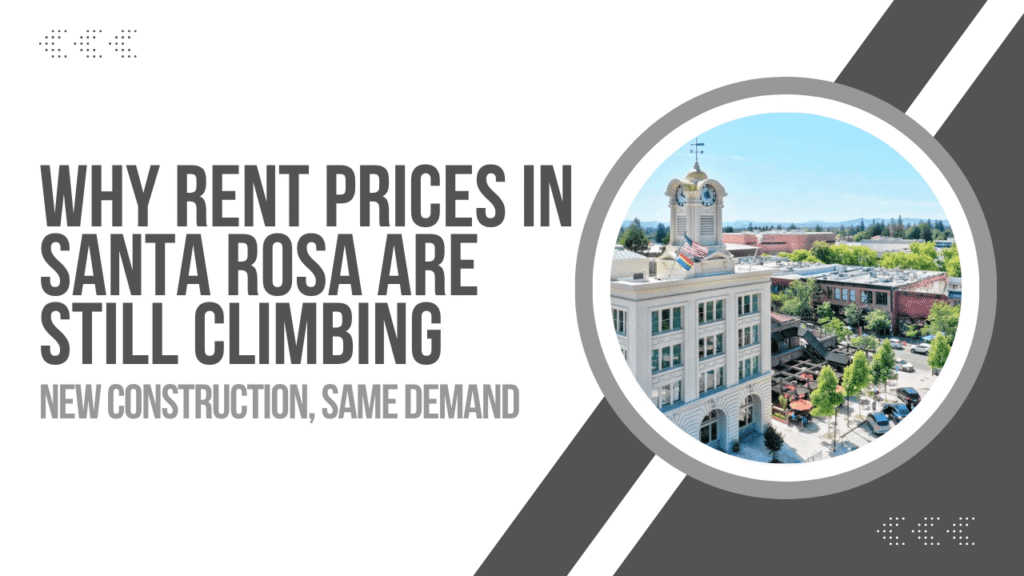
Are rent prices in Santa Rosa still going up, even while they stabilize and even drop elsewhere?
In many neighborhoods, yes.
This is not only astonishing given the general trend of rents dipping across the country, but also because there’s a lot of new construction that’s coming online in the Santa Rosa rental market. Shouldn’t that make rents more competitive?
Maybe.
And at first glance, it might seem that building more housing should bring rent prices down. After all, basic economics suggests that increased supply should ease pricing pressures. Yet in Santa Rosa, a mix of demographic trends, economic forces, and unique local market dynamics keep upward pressure on rents, despite ongoing construction.
Let’s take a look at what’s happening and how it might impact you as a rental property owner and investor.
Quick Summary:
|
Demand Still Outpaces Supply
While Santa Rosa has seen a noteworthy increase in new rental development over recent years, particularly in the single‑family build‑to‑rent segment and new apartment buildings, housing demand has remained strong. Between lifestyle appeal, job opportunities, and an influx of residents priced out of pricier Bay Area markets, interest in renting here remains high.
Even with new rental homes being delivered and even more development planned for downtown and northwest Santa Rosa, overall supply still struggles to catch up with demand.
The number of rental homes continues to tighten in key neighborhoods, especially in popular areas where renters outnumber available listings.
- New Rental Homes on the Market Aren’t Always Affordable to All Renters
Another important point to consider when we’re talking about demand, rental values, and tenants is that not all new construction drives down prices. Many recently completed and planned rental properties in Santa Rosa are built at higher price points with premium finishes and amenities. These projects, because of their quality, are going to have rents at or above prevailing market levels. That doesn’t directly alleviate affordability for moderate and lower-income households.
With construction costs for labor, materials, and permits particularly high in California, developers focus their investments on rental units that will offer higher returns, creating new supply that may be appealing but still expensive for the average renter.
The tenants willing and able to pay the higher rents for these new construction homes could potentially be tenants from outside of the immediate market. They may want access to San Francisco and the Bay area without paying the higher rents in those areas. That dynamic helps to keep the rental values in Santa Rosa high, but it does not help the local tenants looking for affordable homes. Their demand for affordable rental housing has not been met.
- Regional Migration Fuels Persistent Pressure
We know that Santa Rosa’s proximity to larger employment centers and higher priced urban markets such as San Francisco has also contributed to sustained rental demand. As residents look for comparatively more affordable living options while maintaining access to Bay Area jobs, and as remote and hybrid work remains common, migration into Santa Rosa has put ongoing pressure on the city’s rental inventory.
Even as some renters find homes in outlying neighborhoods or switch to owning when possible, the overall demand for rentals remains strong. People continue to move into the area, drawn to its high quality of life and comparatively lower cost of living.
For investors, this means a market where occupancy rates stay high and vacancy remains low, supporting continued rent growth.
- Limited Affordable Housing Keeps Scarcity Alive
We’ve already mentioned that a lot of that new construction is too expensive for many tenants in Santa Rosa. What about the existing inventory of rental homes? Santa Rosa still struggles to produce enough truly affordable housing to match demand from households earning at or below area median income. This gap keeps competition for existing units intense and supports rent increases across a wide range of property types.
Meanwhile, local planners have acknowledged ongoing development goals such as downtown housing targets, yet substantial affordable inventory has yet to materialize at the scale needed to ease rental pressures for many residents.
- Neighborhood Desirability and Lifestyle Factors
Santa Rosa’s diverse and attractive neighborhoods each contribute to rental pricing trends.
Areas like Spring Lake and Bennett Valley consistently see higher and higher rents due to desirable amenities, quality of life, and accessibility, while more affordable areas still struggle with scarcity compared to overall demand.
This localized pricing structure shows that rent inflation isn’t uniform across the city, yet the overall trend still leans upward because demand exists across all segments. From young professionals who may work remotely and are drawn to downtown offerings to families seeking suburban space and good schools, a broad cross-section of renters is competing for limited units.
- Broader Economic Forces at Work
Beyond local Santa Rosa conditions, wider regional trends affect rent pricing too. High home prices and elevated mortgage rates have made homeownership unattainable for many, keeping renters in the market longer. As a result, those who might otherwise transition to homeownership stay in rentals, bolstering demand.
Furthermore, the general slowdown in multifamily permitting seen nationwide, driven by high financing costs and economic uncertainty, means that supply growth may not continue at rates sufficient to suppress rent increases long-term.
What This Means for Santa Rosa Investors and Rental Property Owners
For real estate investors and landlords in Santa Rosa, these dynamics present both challenges and opportunities when it comes to how you price your rental property, market to tenants, and negotiate renewals.
- Strong Demand Supports Rent Growth. Persistent competition for quality rentals means landlords can often maintain strong occupancy and justify rent increases, especially when supply remains tight. Rent control laws will always limit what covered properties can charge, but if you’re exempt from those restrictions or renting out a new property and able to set any base rent, you don’t have to worry that a higher price will lead to a longer vacancy. There are qualified tenants who are willing to pay the higher prices for the homes they want.
- New Construction Alone Isn’t a Quick Fix for the Housing Shortage. While additional units help satisfy pockets of demand, investors should recognize that new development will not automatically moderate rents across the board, especially if it targets higher-end renters rather than broader affordability. Those investors who are willing to rent out properties to middle-income and lower-income tenants will find a large tenant pool of committed residents who are likely to stay in place for longer terms.
- Neighborhood Strategy Matters. Santa Rosa, like many rental markets, is hardly one single demographic or property type. This is a diverse environment with a number of different types of demand. Retirees are looking for something different than what tenants with small children want. Know your neighborhood and your likely tenants. And when you invest, look for opportunities that offer something all tenants will appreciate. Properties in desirable corridors or near transit and employment, for example, tend to outperform others, even in shifting markets.
- Affordability Gaps Create Long-Term Pressure. With affordable housing lagging behind demand, the pressure upward on rents may continue, making rent-stable units attractive from an investment perspective.
Short-Term Rentals in Santa Rosa
 Short-term rentals in Santa Rosa, though tightly regulated, still influence the broader rental market in subtle but significant ways. By converting traditional long-term rental units into vacation or short-term accommodations, property owners effectively reduce the supply of housing available for permanent residents. Even a modest number of units shifting to short-term use can tighten the local rental inventory, particularly in high-demand neighborhoods near downtown or popular attractions.
This reduction in available long-term units puts upward pressure on rent prices for remaining apartments and homes. Prospective tenants face more competition, giving landlords leverage to increase rents or set stricter lease terms. Additionally, the presence of short-term rentals can alter neighborhood dynamics, sometimes increasing noise or turnover, which can indirectly influence the types of tenants willing to pay higher rents for stability and quality of life.
Even with new construction underway in Santa Rosa, rent prices continue to climb because the underlying demand for rental housing remains strong, supply growth hasn’t kept pace for all income levels, and economic forces continue to steer more households toward renting rather than owning. For investors and property owners, understanding these nuances can help you navigate the local rental market and make confident, informed decisions in 2026 and beyond.
As we see it, Santa Rosa’s evolving landscape offers both opportunity and complexity shaped by demand, persistent affordability challenges, and targeted development that reshapes but does not transform the rental supply equation.
Questions about any of this? Please contact us at Prestige Real Estate & Property Management. Our team expertly manages homes in Sonoma County, including Santa Rosa, Windsor, Sebastopol, Petaluma, and Rohnert Park.
