
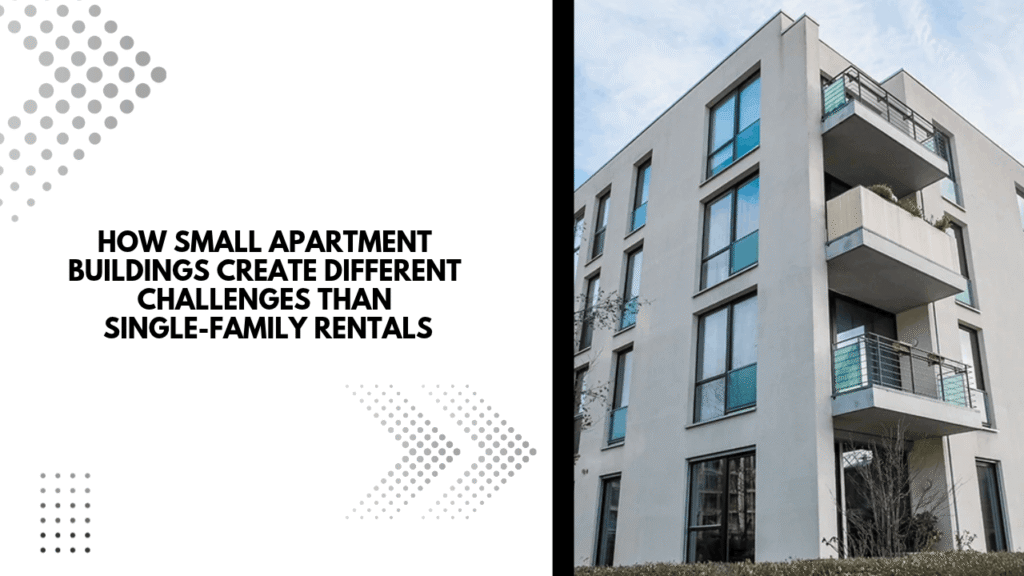
Can managing a six-unit apartment building feel dramatically different from managing six separate single-family rental homes?
Yes.
In a small apartment building, the units are connected by a shared physical environment, shared rules, and often a more complex set of tenant protections. The management challenge isn’t simply multiplied by the number of doors.
Small apartment buildings in Sonoma County can offer attractive economies of scale and multiple income streams, but they also require a more structured approach to leasing, maintenance, tenant communication, compliance, and financial management.
Quick Summary:
|
Small Apartment Buildings are Communities
This is more than a collection of units.
A single-family rental generally gives one household control over its own home. An apartment building creates a shared living environment.
Tenants may share hallways, stairways, parking areas, laundry facilities, landscaping, trash areas, entrances, walls, ceilings, or other building systems. One resident’s actions can affect several others, which means seemingly minor issues can quickly become property-wide concerns.
The management response should therefore be consistent and documented. Rules need to be communicated clearly, complaints should be handled promptly, and similar situations should be treated consistently.
Tenant Protection Laws Can Be More Significant
One of the biggest differences between single-family rentals and apartment buildings in California is the regulatory environment.
- In California, many tenant-protection and rent-regulation provisions distinguish between different types of rental properties. Single-family homes and certain other properties may qualify for exemptions from particular rent-control or just-cause requirements, while multifamily properties can be subject to those protections depending on the property’s characteristics, age, ownership structure, location, and other factors.
- For example, the California Tenant Protection Act of 2019, commonly associated with statewide rent caps and just-cause eviction requirements, generally applies differently to single-family homes and multifamily properties. Some single-family properties can qualify for exemptions, subject to specific conditions and required disclosures. By contrast, many multifamily properties are more likely to fall within the scope of statewide tenant protections.
- In Sonoma County, this gets even more nuanced. An owner’s obligations may depend not only on the property itself but also on whether it is located within an incorporated city or an unincorporated area.
This is an area where professional management and qualified legal guidance can be particularly valuable. Laws change, exemptions have conditions, and a mistake involving a notice, rent increase, or tenancy termination can become expensive.
Maintenance Has a Bigger Ripple Effect
Maintenance is another area where apartment buildings behave differently.
When the plumbing backs up in a single-family rental, one household is usually affected. In an apartment building, a plumbing problem may impact multiple units.
The same is true for:
- Roofing
- Electrical systems
- Water heaters
- HVAC equipment
- Exterior lighting
- Common-area flooring
- Stairs and railings
- Pest control
- Security systems
- Laundry facilities
A small repair can therefore have a disproportionate effect on tenant satisfaction and operating costs.
Regular inspections can help identify deteriorating components before they fail. Predictive maintenance technology helps, too, if you’re willing to invest in it. Tracking recurring repairs can reveal systems that are becoming unreliable. Maintaining relationships with responsive vendors can reduce downtime when something does go wrong.
Apartment maintenance should be managed as an operating system, not a series of emergencies.
Common Areas Become Part of the Rental Experience
For a single-family home, most of the tenant’s experience takes place inside the rented property.
In an apartment building, tenants experience the property every time they:
- Walk through a hallway
- Park their car
- Use a shared laundry room
- Enter the building
- Take out the trash
- Spend time in a common outdoor area
That means common-area condition can influence tenant satisfaction just as much as the condition of the individual apartments.
Budget for these areas accordingly. Common-area expenses are not merely cosmetic. They can influence tenant retention, property perception, safety, and the overall quality of the rental experience.
Tenant Communication Needs More Structure
Communication becomes more complicated as the number of your residents increases.
A single-family owner might communicate directly with one household. A small apartment building may involve several tenants who all have different questions, schedules, maintenance concerns, and expectations.
That creates a need for consistent communication channels.
- Tenants should know how to report maintenance issues
- The should know what constitutes an emergency
- Tenants must understand where to direct questions
- How will you deliver building-wide announcements?
When multiple residents are involved in a situation, a clear record of communications, notices, maintenance requests, inspections, and other management activity can help owners demonstrate that issues were handled consistently and appropriately.
Professional property management systems can make this considerably easier by centralizing requests, communications, records, and financial information.
Financial Management Becomes More Analytical
Small apartment buildings create opportunities that single-family rentals don’t always offer. With multiple units, an owner can evaluate performance at both the unit and building levels.
Instead of asking only what kind of rent should your property generate, you can analyze:
- Rent by unit
- Vacancy by unit
- Turnover costs
- Maintenance expenses
- Utility expenses
- Operating expenses
- Delinquency
- Renewal rates
- Net operating income
That information can reveal patterns.
Perhaps one unit consistently earns a higher rent because of its layout. Maybe certain recurring repairs are costing more than expected. Perhaps turnover is significantly higher among units with particular features.
Data allows owners to make better decisions about the entire building and each unit inside of that building.
Don’t Let Economies of Scale Become False Economies
One reason investors like small apartment buildings is the potential for economies of scale.
- A single roof can cover multiple units.
- One landscaping contract can serve the entire property.
- One management relationship can oversee several tenants.
But those efficiencies should not lead owners to underestimate capital expenses.
A building may have one roof, but replacing that roof can be a substantial expense. Likewise, a single plumbing system, electrical infrastructure, exterior paint project, parking area, or common-area improvement can represent a major capital expenditure.
We recommend that owners maintain appropriate reserves and think several years ahead.
What Should Your Management Strategy Look Like?
It should be proactive. The biggest mistake an owner can make with a small apartment building is managing it like a collection of unrelated single-family homes.
The better approach is to manage the building and the residents as an interconnected system.
Different properties need different strategies. A four-unit building with long-term tenants and separate utilities may have very different management priorities from a 12-unit property with older infrastructure and high turnover.
Small apartment buildings can be excellent investments, and the best way to succeed in renting them out is to not think of them as single-family rentals. Approach the building with structure and foresight.
Frequently Asked Questions

Q: Are apartment buildings subject to rent control when single-family homes aren’t?
Potentially, yes. Certain single-family rentals may qualify for exemptions from specific rent-control or tenant-protection laws, while multifamily properties may be subject to them. The property’s age, ownership structure, location, and other factors can matter. Owners should verify the current rules for their specific property.
Q: Does California’s Tenant Protection Act apply to small apartment buildings?
It can. Many multifamily properties fall within the law’s coverage, although exemptions and specific requirements apply. Owners should review the current law and obtain qualified legal guidance when necessary.
Q: Why is maintenance more complicated in an apartment building?
Shared systems and common areas mean that one maintenance issue can affect multiple residents. Preventative maintenance and building-wide inspections can help identify problems before they become expensive or disruptive.
Q: Should owners treat each apartment as a separate investment?
Not entirely. Unit-level performance matters, but the building’s common areas, systems, operating expenses, tenant relationships, and capital needs also affect the overall investment.
Q: Why does local property management expertise matter in Sonoma County?
Rental regulations, tenant protections, and local requirements can vary by jurisdiction. Understanding the specific rules and rental conditions affecting a property is essential for effective management.
The differences from single-family rentals go well beyond having more tenants. Apartment buildings introduce shared spaces, interconnected systems, more complicated maintenance considerations, property-wide tenant relationships, and potentially more extensive tenant-protection requirements.
For Sonoma County owners, local knowledge matters. Understanding the property’s jurisdiction, applicable regulations, rental market, physical condition, and financial performance provides the foundation for better decisions.
Professional management can help transform that complexity into a repeatable process, and that’s how we can help. Our professional services allow owners to focus less on individual problems and more on the performance and long-term value of the investment.
Please contact us at Prestige Real Estate & Property Management. Our team expertly manages homes in Sonoma County, including Santa Rosa, Windsor, Sebastopol, Petaluma, and Rohnert Park.
